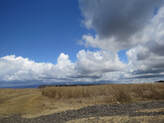
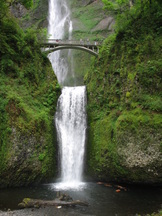
Travel can offer a new way of seeing things, revealing perhaps, a new perspective. To do so requires that we stay attentive and attuned to the present moment. However, on long rides between destinations there is a temptation to fall into a kind of boredom as the countryside goes past. I usually resist being lulled into taking the passing scenery for granted because I know I may never see that particular countryside again. And for the most part, being attentive to what we are passing by provides the opportunity to notice little things that would have otherwise been missed. This is why I tend to stay quiet whenever I am in a moving vehicle, something I have always done. Once the wheels get moving, I become quiet, observing what is around me. In the quiet, not only do we see more, but we hear more: only in the quiet can we hear our own thoughts, and better yet, we can also more readily listen to God. Jesus modeled this behavior in His ministry; while He preached often, He always listened intently to the many people who came to Him. He listened with His ears, with His eyes, and most importantly, with His Heart.  To listen as Jesus did, requires being fully attentive to the present. While planning for the future is imperative in many areas of our lives, making it our approach to everything in life will almost ensure loss of the present. Not only that, by living in the future we risk getting wrapped up not in what will come, but what we think is to come. And there’s the rub: life rarely goes according to our plans, and therefore it is essential that we put our trust in the Lord to guide us. When an unexpected turn occurs, it usually involves struggle of some sort, but it is through prayer, listening to God and relying on His grace that we can come to acceptance of the new situation with its unknown path. Jesus made it clear that God knows all our needs. Thus, we do not need to be overly concerned about tomorrow; He said, “Seek first the Kingdom of God and His righteousness and all these things will be given you and besides. Do not worry about tomorrow; tomorrow will take care of itself.” (Matt. 6:33-34) *  When He was with the Twelve apostles, Jesus saw how easily they became distracted or became focused on the future rather than the present. There are many examples in the Gospels which illustrate this, but the one that comes to mind is the ‘ambition’ of James and John who, distracted from the present by their mother(!), requested to sit at the right hand of Jesus in the Kingdom of God. Though it was a rebuke, Jesus used this as an opportunity to teach: “You do not know what you are asking. Can you drink the cup that I drink or be baptized with the baptism with which I am baptized?” They said, “We can.” Jesus responded: "“The cup that I drink, you will drink, and with the baptism with which I am baptized, you will be baptized; but to sit at my right or at my left is not mine to give but is for those for whom it has been prepared.”" He went on to describe to the other apostles, indignant at the ‘gall’ of James and John, that the first shall be last and the last, first. (Mark 10:38-45) In His response Jesus was emphasizing more than the fact that He is not the one who will decide this, but that they had to complete their given mission (vocation) first. Therefore, they needed to stay attentive to what was at hand rather than to focus on the end of the journey. This was encapsulated in the virtue that will enable doing just that: humility.  The lesson in this passage is important for everyone: stay in the present moment to experience, listen, observe, learn, and then respond to the movements of God in our hearts.** It is in this process of attentiveness that we begin to see as Jesus sees, hear as Jesus hears, and love as Jesus loves. When we are so attuned to Him, discernment and wisdom will flow from the Spirit, as well as the mercy and love that only God can enliven within us. If we do not see and hear in the first place, response is impossible. Thus, seeing and hearing in this spiritual way enables greater mercy and compassion in the presence of beauty which may have been previously unseen, but now becomes evident. It is a process, not something that happens in a ‘Damascus moment’ such as with the conversion of St. Paul. It is only possible through regular prayer and study of Scripture; it is through these that we learn who God is and how He communicates His love.  Clearly, we do not have to take a road trip to learn to live in the present moment. Rather, the lessons we learn through our relationship with God, empowered by His grace, can be applied to everything we do. Slowing down to savor our food and to be attentive to that which is beautiful is a good start; savoring moments with family, friends, and neighbors is even better. The true holiness that comes from learning to do this will be evident when we find ourselves savoring with love everyone whom we encounter, especially the stranger, the lost, the wounded, and the lonely. In seeing and hearing with the eyes of faith, we will be listening with our heart joined to the wise and loving Heart of Jesus.  May we learn to live in the present moment with eyes to see and ears to hear! May we trust in Jesus that He will lead us through moments of darkness and struggle! And may we learn to listen with our hearts just as Jesus does! Let us meet in the Heart of Jesus! Peace!
©Michele L. Catanese * In the passage quoted there is a final sentence which I omitted in the text, but which deserves a comment: “Sufficient for a day is its own evil,” Jesus seems to be referring to the potential temptations that come with each day of which we can fall into if our attention is elsewhere. Being attentive is not only important concerning beauty or opportunities to do good that we may miss, but our attention is imperative if we are to spot temptations and the works of the evil one that we can inadvertently fall into. Learning to notice everything is important; our ability to do this comes with prayer and with practice! ** There are other instances of this same lesson such as the rich young man who was not yet ready to follow Jesus, (Matthew 19:16-30 or Mark 10:17-31), or the apostles failed attempts at driving out demons, (Matthew 17:14-20; Mark 9:14-29; Luke 9:37-43). They were simply not yet ready because their faith needed to grow through the process of prayer. Images: 1. My photo; in the Austrian Alps. 2. Image; The Galilean Jesus, by Fr. William Hart McNichols. If you want to, you can purchase a copy of this in one of many mediums at https://fineartamerica.com/featured/the-galilean-jesus-266-william-hart-mcnichols.html. 3. Fresco painting; The Last Judgment, Giotto di Bondone. This is the culmination on the wall of frescoes in the Scrovegni chapel, Padua, Italy. (In the public domain.) 4. My photo; path on the Pienza Loop, Tuscany, Italy. 5. My photo; main plaza in Pienza, Tuscany, Italy. 6. My photo; at the St. Lawrence River, Quebec City, Quebec, Canada. Note: In compliance with GDPR rules, I wish to make it clear that I do not gather any information on any of my readers at any time.  I will never forget the mountain climb my husband and I experienced in 2009 while on pilgrimage in Italy. Even though it was an optional part of the pilgrimage, it was both an exciting and terrifying prospect.* It was exciting because I have always been a bit adventurous, though as I have gotten older, there are certain areas in which I am adventurous in theory more than in practice; it was terrifying because for much of my life I had a fear of heights. However, my adventurous side won out mostly because once we got there, I felt that I had gone all that way and therefore needed to complete the pilgrimage. The mountain climb was really not an option for me, since I had promised to offer it as prayerful sacrifice for a friend who was in great need. I could not back out, even though the temptation was strong at a few points. This was pilgrimage, after all, which often means there might be some discomfort or challenges along the way, but they ultimately lead to graces if one is open.  In a way, climbing Mt. Mucrone was akin to what it may have been like for the apostles. Following Jesus was both exciting and challenging: they were no doubt excited by what they witnessed while being with Him, but they also struggled because He said and did things no one else said or did. His lessons were not always clear to them, especially not when He spoke of dying and rising on the third day. For Peter, James, and John, Jesus provided an especially unique experience which involved climbing Mt. Tabor; Jesus asked them to accompany Him up the mountain, and once to the top, He transfigured before them. He changed in appearance, shining brilliantly with a radiance that was “dazzling.” (Luke 9:28-36)** Moses and Elijah appeared as a cloud covered everything, and all three conversed while the awestruck apostles watched, not comprehending what they were witnessing. Then a voice from Heaven was heard: "This is my Son. Listen to Him." As they made their way back down the mountain, Jesus asked them not to talk about it with anyone until after He had risen. While struggling to make sense of what they had experienced, the men who went up the mountain were no longer the same. Something had begun to shift within them, way beyond their ability to understand at that moment.  When I climbed Mt. Mucrone during my pilgrimage, though quite different from the apostles, I too, had a transformative experience. While I did not see a transfiguration as they did, interiorly one did occur. At the top after a strenuous climb, our group went across a land bridge to get to the Cross at what technically is the summit. I volunteered to stay behind to take pictures, a way to get out of crossing the frightening land bridge, in all honesty. The time alone, however, was what the Lord used to provide an experience of His presence. Like the apostles on Mt. Tabor, (though without Moses and Elijah!), a cloud settled on the mountain and I knew I was in the presence of the Lord especially because the sense of peace and joy were so vivid.*** Something within me was transfigured because of the presence of God; in addition to great consolation, I soon realized I was healed of the fear of heights. Descending a mountain presents different challenges than ascending because one is effectively looking down the entire time, but as we descended, I had no fear at all.  The three apostles who ascended Mt. Tabor probably knew that something was changing within their hearts, and probably realized it more fully, under the power of the Holy Spirit, after Jesus’ death and resurrection. That is, they realized that in being present at the Transfiguration of Jesus, they too had transfigured. Only then could they recognize that their relationship with Jesus was a process of growth spiritually such that everything they needed, including understanding, love, mercy, forgiveness, and the courage and wisdom needed for leadership, began with the experience atop that mountain. Thus, every challenge that comes our way is also an invitation to transfigure. Every mountain we have to climb and every cloud that enfolds us, (even a dark one), is an invitation to transform and grow, especially when we feel like the road is very difficult and we are not sure we can make it. If we rely on Jesus to get us up the mountain, we can experience a change deep within our hearts. The more difficult the climb, the more we can learn about ourselves and the call to holiness we have been given.  Transfiguration means that we now have the capability to experience everything differently. Every experience of beauty becomes an opportunity to become more beautiful; every experience of love is an opportunity to become more loving. Every time we are forgiven our sins, every time we receive a Sacrament, is an occasion which offers transfiguration. Transfiguration is about being changed so we can experience the love of Jesus more deeply and then better share it as His disciples. That is the key to understanding the event on Mt. Tabor: it is about accepting His presence and His great love, coming to know Him a bit better, and allowing ourselves to be changed by the experience. This is the way of holiness: becoming more like Jesus by allowing ourselves to be enfolded in Love to become Love.  May we open ourselves to transfiguration into holiness just like the apostles! May we invite Jesus into our hearts more deeply with every opportunity God provides! May we trust Jesus enough to follow Him both up and down the mountains of transfiguration in our lives! And may we be enfolded in His love and in His glory! Let us continue to meet in the radiance of Love, the very heart of Jesus! Peace!
©Michele L. Catanese * The pilgrimage was called In the Footsteps of Blessed Pier Giorgio Frassati. Because our pilgrimage was in 2009, he was still a Blessed (beatified); as of last September, Pier Giorgio was canonized. Thus, he is now Saint Pier Giorgio Frassati. ** What is interesting in this passage is that Luke noted that Jesus was praying when He transfigured. (Luke 9:29) *** It was not lost on me at the time that in Scripture God is encountered on mountains, such as Moses and Elijah’s encounters in the Old Testament. Images: 1. My photo; a nearby mountain as seen from Mt. Mucrone, near Oropa, Italy. The cloud descending on the top of the mountain is one of my favorite photos since it reminds me of my experience. 2. Painting; The Transfiguration, by Duccio di Buoninsegna. 3. My photo; at the start of the climb. Mt. Mucrone's peak is behind me. 4. Oil painting; Le Soliel, by Vincent van Gogh. 5. Painting; Landscape, by Pablo Picasso. This was from an early part of his painting career. 6. Icon; Cristo Pantocrator, by Fr. William Hart McNichols. You can find this at fineartamerica.com/featured/cristo-pantocrator-175-william-hart-mcnichols.html Note: In compliance with GDPR rules, I wish to make it clear that I do not gather any information on any of my readers at any time. |

Heart Speaks to Heart
|
 RSS Feed